Sisu tells the story of Aatami Korpi (Jorma Tommila). Korpi is an ex-soldier living off the grid. He’s out in the fields mining for gold. Then he strikes it rich. He finds a massive vein of gold.
As he travels the Lapland wilderness to take his find to the bank, he encounters German soldiers who try to take what’s his. Korpi won’t go down without a fight.
Especially since he has Sisu… What is Sisu? It is a Finnish term for a combination of extreme determination, grit, resilience, and tenacity, often described as “stubborn courage” or the ability to persevere against, and overcome, impossible odds. It signifies a mental toughness that allows individuals to continue acting rationally in the face of adversity, pushing beyond their limits.
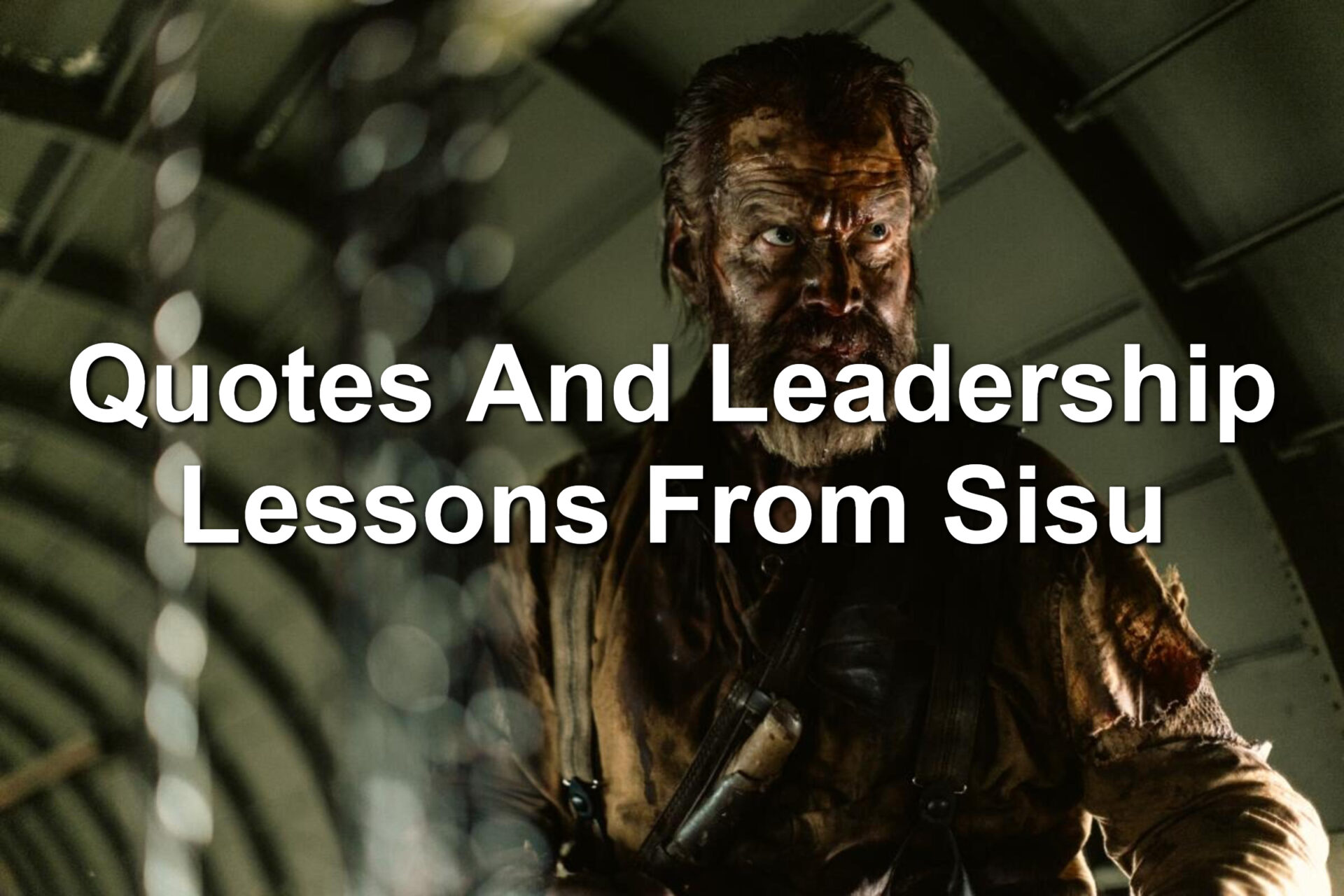
These German Nazis don’t know what’s coming for them now that they’ve tried to take what’s not theirs.
Join us as we explore Korpi’s journey. We’ll explore how Sisu can become your leadership roadmap.
Quotes And Leadership Lessons From Sisu
1. It’s okay to leave old things behind:
There was a man who decided to leave the war behind him… for good.
The film opens with this statement. It’s all about Korpi and his journey to leave behind the war that took everything from him.
All he wants to do is mine for gold. Mind his business. Be peaceful.
And that’s a great goal to have. To leave behind the old, dangerous ways.
Throughout your leadership journey, you’re going to find yourself desiring many different things. One of those may be retirement or leaving the stress of leadership behind.
I won’t discourage you from taking this path. Retirement or leaving leadership isn’t the end of the world.
In fact, it’s the start of a new world for you.
Yes, it’s okay to leave behind old things, even your leadership title.
2. Have situational awareness:
Korpi had left the war-torn lands for a peaceful existence as a gold miner. However, the lessons he learned on the battlefield haven’t been left behind.
As Korpi mines for gold, you see how he demonstrates situational awareness. Every couple of swings of the axe, Korpi looks up. He’s scanning, trying to see if there’s any danger.
Great leaders have situational awareness. They’re paying attention to what’s happening around and to them.
They don’t let anything get past their purview. Instead, they’re looking for the next threat, next challenge, next obstacle.
Keep this in mind: While you need to have situational awareness, you also can’t let it rule your life. Don’t become so fearful that you can’t stop looking for trouble.
3. Leaders see the damage others are causing:
Korpi is standing in an open field. It’s nighttime. His gaze is fixed on the warzone.
Bombs are exploding in the distance. The sky lights up as the bombs drop.
Korpi can see the damage happening from a distance.
You don’t have to be up close and personal to see the damage others are causing to an organization. You can stand back and see the havoc being caused.
It’s sad that the damage leaders do to organizations can be seen far and wide. Often through the lives of those they’re leading.
If you see the damage happening, speak up. Try to be the leader others need you to be.
4. Leadership has chapters:
The filmmakers decided to make Sisu in chapters. At the start of every scene, a chapter title flashes on the screen. The chapters in Sisu were:
- Chapter I: The Gold – The prospector finds a rich vein of gold.
- Chapter II: The Nazis – The prospector encounters a Nazi patrol.
- Chapter III: The Minefield – A tense sequence involving a minefield.
- Chapter IV: The Legend – The Nazis learn of the prospector’s deadly reputation.
- Chapter V: Scorched Earth – The prospector retaliates against the Nazis.
- Chapter VI: Kill ‘Em All – The final, violent showdown.
Each chapter title relates to what happens in the film. They lay out exactly what you’re going to experience. It helped viewers understand what’s coming next. The titles also helped viewers know when something was going to change.
Guess what else has chapters? Our leadership journey.
Titles may include:
- Chapter 1 – The Start
- Chapter 2 – The Bad Leader
- Chapter 3 – The Danger Zone
- Chapter 4 – The Shift
- Chapter 5 – The Transition
- Chapter 6 – The Legend
Each piece of our leadership is a different chapter. There’s so much that happens that separating our leadership journey into bite-sized pieces can help us relate our story to others.
5. Bad leaders abuse their people:
SS Obersturmführer Bruno Helldorf (Aksel Hennie) was the leader of a platoon of Nazi soldiers. He’s also on the hunt for Korpi to get his gold and exact revenge for killing some of his fellow soldiers.
Korpi heads into a minefield where his horse steps on a mine. He’s heartbroken over the loss. However, Korpi’s loss doesn’t stop Helldorf. It empowers him.
He sees Korpi survive the blast. As Korpi continues on his way, Helldorf chooses to send some of his soldiers into the minefield that is covered by smoke and dust. He doesn’t care that they may lose their lives. In fact, after one soldier is blown up, he sends more.
He was willing to abuse and lose his people.
We have to be careful as to how we lead our people. We can’t be willing to send them out to do things that can hurt them. Especially if we’re unwilling to do those things ourselves.
Take care of your people. They’re what’s supporting your organization.
Without them, we’re nothing.
6. Aino (Mimosa Willamo):
Pick me.
One of the Nazi soldiers picks two women from the back of their truck. He’s going to send them in front of the truck to try to protect their vehicle.
Aino isn’t chosen. Two of her friends are. She speaks up. She demands to be chosen instead.
She was willing to sacrifice herself for the sake of others.
That’s what leaders do. They don’t sit back. They choose to speak up, stand up, and say, ” Pick me.
Are you willing, or even wanting, to be picked? Are you okay going into dangerous situations?
Great leaders say pick me, no matter the risk.
7. A leader’s reputation will precede them:
Korpi was a Finnish soldier. He had a reputation as a violent, confident, and competent soldier.
One of the Nazis told the rest of them that they’re lucky he only got 8 of their fellow soldiers. His reputation said they should all be dead.
The Nazis had given him the name “The Immortal.”
The reputation you gain in your current organization will follow you. It will go from organization to organization.
Make sure you’re building a reputation that’s worth following.
8. Aino:
You’ll see what happens when you take everything from him. He won’t give up. He’ll just keep coming back.
Two Nazis come into the back of the truck holding the women. They’re laughing and carrying on. They believe Korpi is dead.
Afterall, they left him hanging at an old gas station.
Aino starts to laugh. The Nazis are shook. Why is this woman laughing? Has she lost it?
No, she understands what happens when someone strips someone of everything. Especially someone stubborn.
They don’t back down. They keep coming. They don’t give up.
Are you willing to have the tenacity Korpi did? Are you willing to keep going when everything seems against you?
Great leaders push on despite the pain, frustrations, and challenges.
Keep going. Your people deserve you. You deserve to keep going.
9. Great leaders invite others to lead:
Korpi kills the two Nazi soldiers who believed he was dead. Then he gets into the truck.
Once in the truck, Korpi hands Aino a gun. He invites her to join in the fight.
Great leaders don’t lead alone. They invite others to join.
Who are you inviting to lead alongside you? Who are you mentoring and building up?
Great leaders invite others to rise up.
10. Great leaders don’t have to speak a lot:
For most of the hour-and-a-half-long movie, Korpi is silent. We don’t hear him say a word.
It’s not until the final moments that Korpi says anything.
Korpi walks into a bank, carrying his gold. He lays it out on the counter. He tells the bank teller (Aamu Milonoff) to give him big bills.
It was a powerful statement to see a main character speak only one line. It shows the power of words and the power a great lead carries.
Know that you don’t have to say a lot as you lead. What you must do is to be the example.
Do what you want others to do. Show them. Don’t tell them.
Your actions will have a much bigger impact than your words.