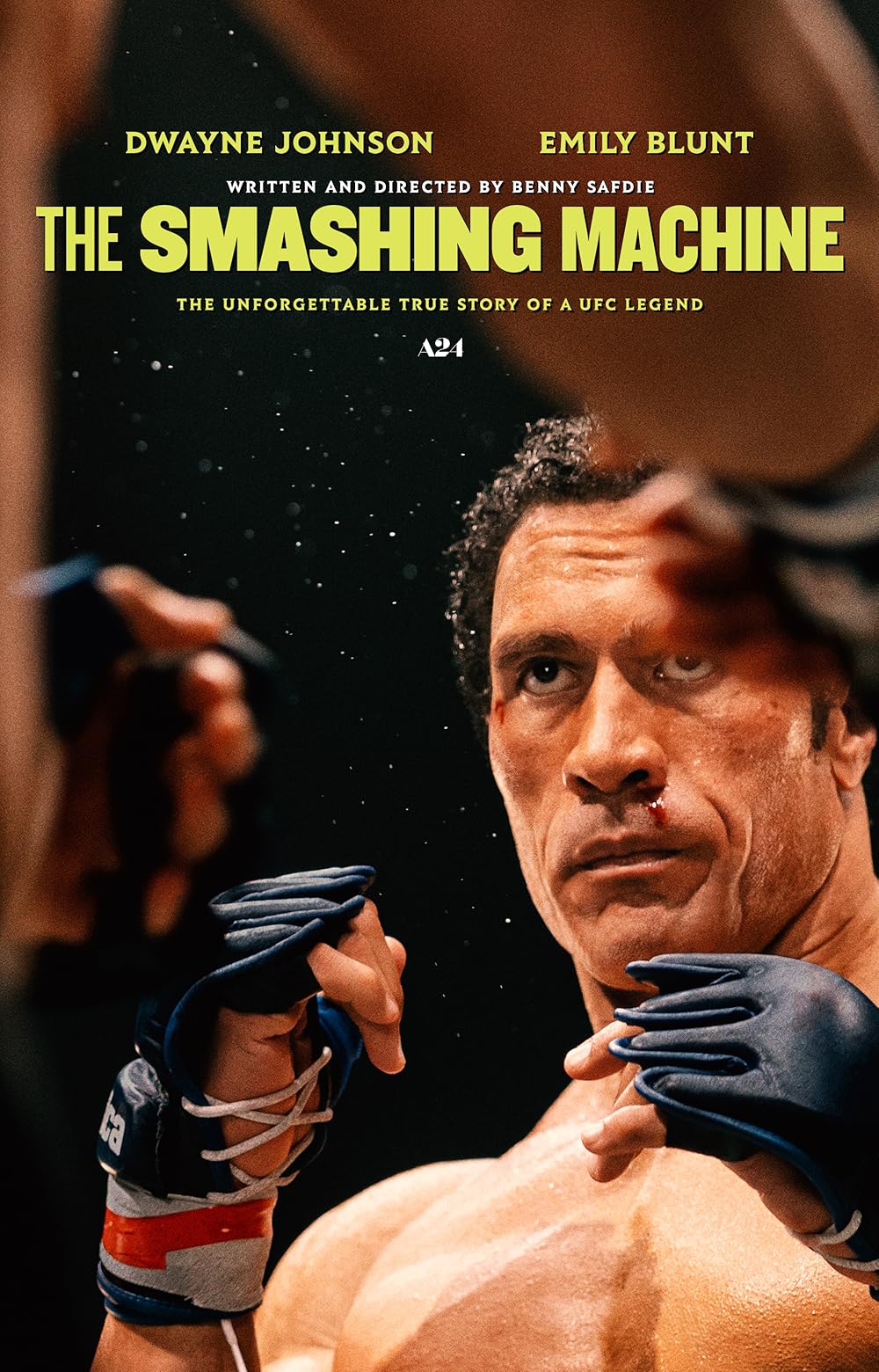
The life of Ultimate Fighting Championship champion Mark Kerr (Dwayne Johnson) is told in the A24 film The Smashing Machine. The film opens with Kerr doing an interview about the success of UFC. Then he’s off to the next match.
His life quickly becomes complicated as he’s introduced to narcotic painkillers. He spirals into abuse that turns his life upside down as he rises through the UFC.
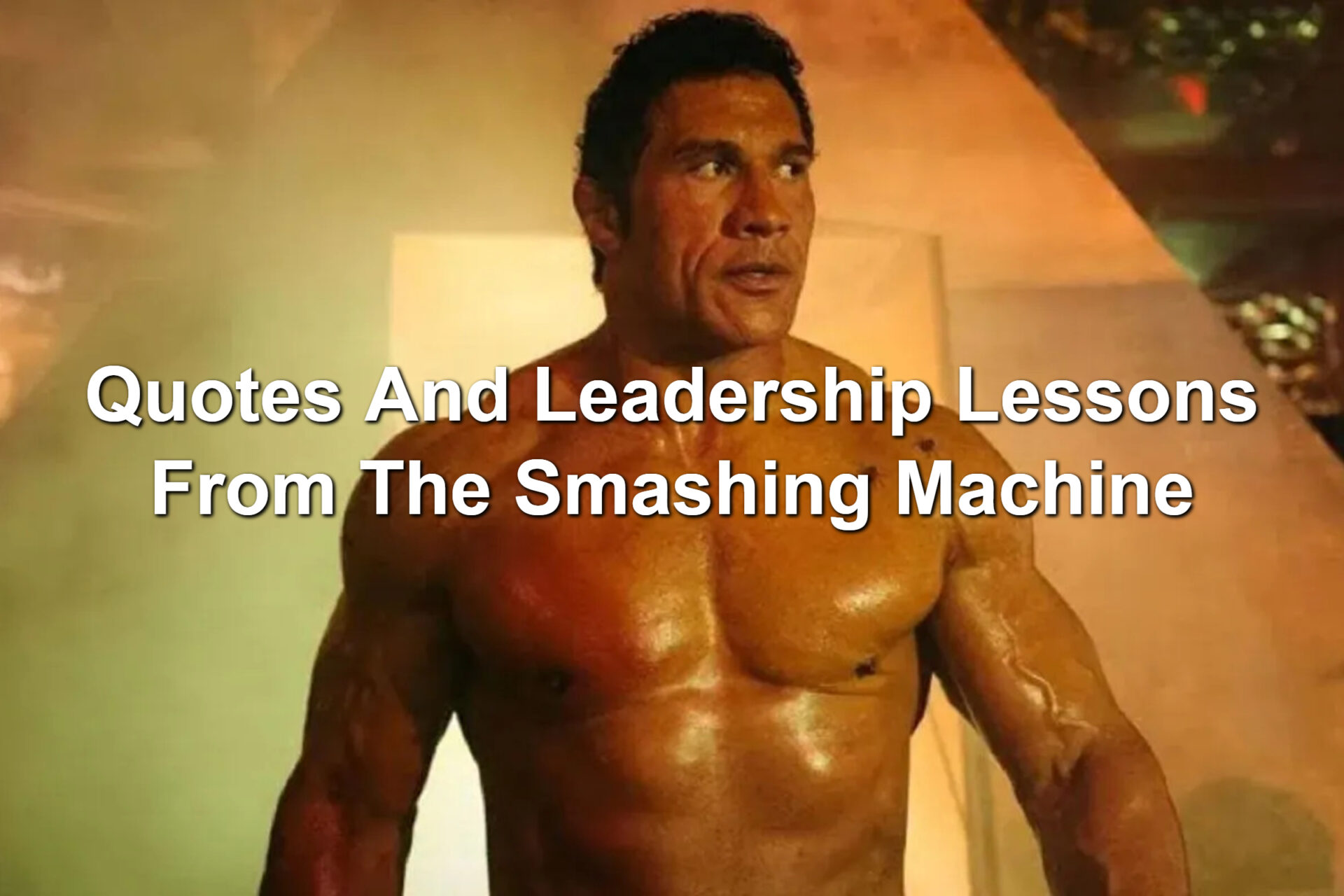
He’s a villain. He’s a hero. He’s a champion. And The Smashing Machine tells it all.
That’s why it’s such a great canvas for leadership lessons. Let’s dive into 10 of those leadership lessons.
Quotes And Leadership Lessons From The Smashing Machine
1. Mark Kerr:
Is he fine?
Kerr faced his first opponent, Paul Varelans (Andre Tricoteux), in the film. He annihilates him.
After the match, Kerr is concerned about Paul. Is he hurt? Will he recover?
Despite how violent Kerr was, he had concern for others.
I loved seeing this gentle side of Kerr. It showed that even when you have to do things that hurt others, you can still care about their well-being. Do you have concern for those you lead? Do you even when:
- You have to fire them?
- See them mess up a project?
- They lose someone in their life?
Great leaders care for those they lead.
2. Winning can lead you down a dark path:
Kerr loved the feeling of winning. Beating another person into submission, knocking him out, and getting the judge’s decision pumped him up.
The feeling of winning led him to do anything to win. Including the use of narcotics. He would win at any cost.
I’ve seen leaders get to this point. They love the feeling of success, of winning. They will do anything to capture the W for their organization.
Beware of the feeling of success. It can lead you down a dark path. You may not get addicted to narcotics but you may find yourself:
- Spending more time at the office than you should
- Ignoring your family
- Finding release in the things you shouldn’t
Even though success is a good thing, it can be a bad thing.
3. Mark Kerr:
If we don’t control our emotions, our fears and our anxieties will get the best of us.
And you know what happens?
We get slapped around by our emotions
Kerr was being interviewed and had a great response to how he’s feeling. It was going to be his first time in the octagon (the mixed martial arts typical ring).
His answer was great. He knew emotions had to be controlled, but not eliminated.
Do you control your emotions? Or do you let your emotions run wild in your organization?
Emotions are great. They can be thermometers for the situation. However, you have to make sure your emotions are not a thermostat.
Don’t let your emotions control you. Control your emotions.
4. Beware how you treat your pain:
Kerr began to use narcotics to cover up the pain he experienced in the ring. The more pain, the more narcotics. The more narcotics, the more he became addicted.
It was all about treating the pain. And that treatment led him down a dark road.
Leading others will bring you a lot of pain. From letting others go to losing them by their own choice to seeing the results of a bad business decision. There will be leadership pain.
What will you do to treat it?
I’ve seen leaders fall into addiction, sexual sin, and more. It’s ugly.
I’ve also seen leaders who know they’re in trouble. They get the help of a mental health therapist. They talk to their pastor. They get help.
Make sure you treat your leadership pain in the right way.
5. Mark Coleman (Ryan Bader):
So, tell me what happened…
Dawn Staples (Emily Blunt) finds Kerr on the ground. He’s unconscious. He’s having a reaction from his drug abuse.
She gets Kerr to the hospital. She reaches out to Coleman, one of Mark’s good friends and fellow UFC fighters to help talk some sense into Kerr.
Coleman visits the hospital Kerr is in. He asks Kerr what happened. Kerr gives a fluff answer. Coleman knows there’s more and keeps pushing.
When you have an issue at work, do you ask a single question and leave it at that? Or do you continue to push to get the real truth?
You have to be willing to dig deep and get the real answer. Surface answers will usually appear in response to the first question. You can go deeper by repeating the question or asking follow-up questions.
If you want real answers, ask what happened… then go deeper.
6. We all need help:
Kerr gets out of the hospital. He begins to clean out the house.
What does that look like? He goes through all of the illegal medications and throws them out. He got rid of what didn’t serve him well.
Then, he went to rehab for help.
We all need help… Whether we want to admit it or not. There’s something in our lives that can be better.
Go, get that help. Your life will be better. The lives of those you lead and live with will be better.
Getting help is okay.
7. People can be bad for you:
Kerr went to rehab to get better. He did. When he returned home to Staples, he wasn’t the same man.
Staples was frustrated with the new Kerr. He wasn’t reliant on her or the pills.
What she did next was so sad. She tried to get him back into addiction. We see her opening a bottle of pills in front of Kerr to try to get him re-addicted.
Staples became toxic to Kerr.
There are times when people in your life can be bad for you. This could look like:
- Friends who try to pull you in a direction you shouldn’t go
- Employees who won’t do the work and invite you to slack off
- A leader who cuts corners asks you to do the same
Watch out for people who ask you to do the wrong thing. They will drag you down.
8. Hard work will leave you exhausted:
Kerr begins to train with Bas Rutten (played by the trainer). He and Bas work out hard. They both want Kerr to win. To do that, he has to get into shape.
After their training session, Kerr is on the ground. He’s exhausted. He’s trained hard and put in the work.
Sometimes, leaders think the feeling of exhaustion is bad. It means something isn’t right.
More often, the case is that they’ve worked hard. They’ve put in the time, energy, and effort to become better.
That’s the reason they’re exhausted. They put in the hard work.
9. Bas Rutten:
Take your time. You’ve got time enough.
Kerr was fighting against Enson Inoue (Satoshi Ishii) at the 2000 Pride Grand Prix. Inoue takes Kerr to the ground. It’s a dangerous position to be in as a mixed martial arts fighter.
Bas didn’t see it that way in this fight. Instead, Bas encourages Kerr to take his time. There’s enough time on the clock to drain that he would be okay.
Leaders are often pressured for time. Everything is mission-critical. If a project goes over, it will be the end of the world. But will it?
You have to examine what’s important. What needs to be done. And what could be left for later.
Take your time. You have enough of it.
10. Even when you lose, you can still win:
Kerr hoped to win the 2000 Pride Grand Prix. It would have put him back at the top of the MMA world. However, he loses.
Coleman, his friend, goes on to win the 2000 GP. He beats Inoue and takes the championship. He gets revenge for Kerr.
The more important thing is that despite Kerr’s loss in the octagon, he won the real fight. He got clean. He lost, but he won.
You will have many losses. Sometimes it is a project that fails. Othertimes it will be a bad hire who corrupts the organization’s culture.
But there are bigger battles out there.
You might save your marriage while struggling at work. That’s a bigger win than your loss.
You might get physically or mentally healthy even though you lost your biggest client. You can get new clients. Your health, though? It matters more than the client.
Win where it matters.