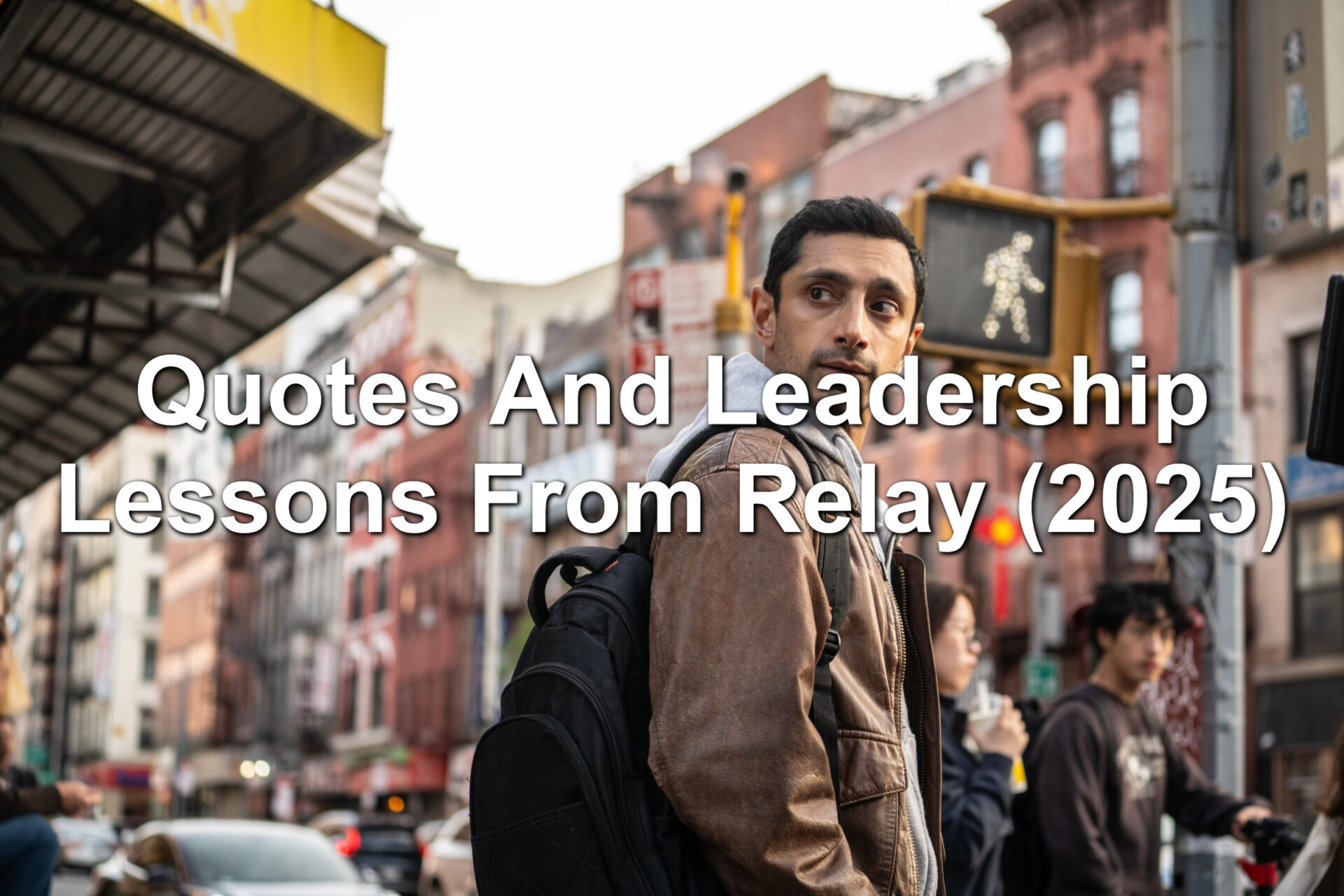
Relay is a 2025 thriller film released in theaters in August. It tells the story of Tom (Riz Ahmed). Tom is a bribe facilitator for corporate whistleblowers. He takes on cases where someone has obtained information they shouldn’t have and wants to return it.
He recently helped Hoffman (Matthew Maher) give back sensitive information. Hoffman has some doubts about whether or not he did the right thing. Then Sarah (Lily James) reaches out to Tom. She had recently come into possession of information that would bring down a company. She’s been harassed and threatened. She wants it all to end.
To reach Tom, Hoffman and Sarah use a relay service. A relay service is used by people who are hard of hearing to make phone calls. They call into the service, and the relay service acts as a third-party intermediary to communicate text-based messages to a hearing party or to convert audio communication to text for a non-hearing or hard-of-hearing party. None of the messages is recorded or kept. It’s all private.
This unique way of communication makes for an interesting movie. Especially with the twists that come.
Let’s take a look at the leadership lessons in Relay and how they apply to you.
Quotes And Leadership Lessons From Relay
1. Hoffman:
You just look like everyone else.
Hoffman met with Tom to turn over the documents he’d collected. He tells Tom that he expected him to look different.
Maybe more evil. Maybe more athletic. However, Tom looked like everyone else.
We get caught up in the idea of what a leader should look like. He should move with power. With sureity. Maybe she should look beautiful. Or he should be handsome.
The truth is, leaders look just like everyone else. They’re you, me, your brother Fred.
Leaders don’t look different. They act differently.
2. Give people more than they expect:
Hoffman completed the transaction with Optimo Pharmaceuticals. He was done. Then he received a payout from Tom.
The amount? Well beyond what he ever expected to receive.
He was shocked.
Your people should be as well. Leaders and organizations should be willing to give their people more than they expect.
That paycheck is just the beginning. Think about what else you could give your people-
- A quarterly bonus
- Extra time off
- A getaway with their spouse
If your company is doing well, make sure you give back to your employees.
3. The way you treat people changes the way they behave:
Sarah contacts Tom through the relay service. She tells her story to him.
At first, Sarah wanted to do the right thing. She wanted to expose the company she worked for. But then something changed (we discover there’s a lot more to the story as the movie progresses).
She claims the company began to harass her. They threatened her. They stalked her.
Now all she wanted to do was to get their information back. All because of the harassment.
The way you treat your people matters. Treat them with respect, they’re going to respect the organization. Treat them poorly, they’re going to have a poor view of the organization.
Our employees often reciprocate our actions. Make sure you’re treating people the way you want them to treat the organization.
4. Give clear directions:
Tom reaches out to the CEO of Sarah’s company. He doesn’t answer, so Tom leaves a message.
In the message, Tom left clear directions on what he was to do. He must follow them or the documents will be released.
What kind of directions are you giving to your team? Are they muddy? Unclear? Lengthy?
If we want something done in a specific way, we must ensure that our communication is clear. People often struggle to understand what you think you’ve communicated. They can only understand what you communicated.
5. People often trade one addiction for another:
Tom meets Wash (Eisa Davis), his Alcoholics Anonymous sponsor. Wash tells Tom that people often trade one addiction for another.
It could be alcohol for extreme sports. Workaholism for nights out on the town. Or something else.
Addictions are traded. Tom had traded his alcoholism for a dangerous job of information and money.
We have to be aware of what addictions we hold. Some are good, others are bad.
When we end one, we have to be aware of what we might be picking up.
6. People want you to listen:
Sarah calls and leaves Tom a message on his phone. During the message, there’s a long pause. One long enough that most people would have hung up.
Tom didn’t. There was more to the message. Sarah states she wondered if Tom even listened that long.
He did.
Guess what? Your people want you to listen to them. They want you to listen past the blank spaces in their conversations.
Keep listening. Your people need you to listen.
7. Sarah:
Has it ever gone wrong?
Sarah’s been playing Tom. She’s not really a corporate whistleblower. She’s working for Optimo Pharmaceuticals to get the documents back. This hasn’t been revealed yet, but it soon will.
During one of their conversations, Sarah asks if things have ever gone wrong. We think it’s because she’s scared. It’s because she knows what she’s doing but Tom doesn’t.
Reflect on the times when things have gone wrong. What caused them? What could have prevented them?
The more you think about what could go wrong, the more action you can take to prevent it from happening.
8. Inaction causes guilt:
Hoffman calls Tom. He’s frantic. He tells Tom that he has blood on his hands. He’d turned over information that could have prevented deaths!
Hoffman’s been mulling over what he could have done. He could’ve alerted someone. He could have done something.
He chose not to. And now he feels guilty.
Why did Hoffman feel guilt? He chose to do nothing to help the situation. He chose inaction.
Tom, in a later scene, is at an AA meeting. He says:
I still carry a lot of guilt and shame.
Why? Because he had chosen to sign an NDA. He could have done more.
We feel guilt, too… When we chose not to act as a leader should. We feel guilty when we know we should have done the right thing but chose the easier option.
Stop choosing inaction. Choose action.
9. Reach out to the right person:
Tom knew what Wash did. She was a cop. He needed help and he knew who to reach out to.
He sends Wash a text. He needs help.
Wash and the police show up just at the right time. They help take down Sarah and her co-conspirators.
Who do you know? Do you keep track of what they offer?
Everyone you know has a unique friend group and set of talents.
Reach out to them when you have a need. They’re willing to help… If you’re willing to reach out.