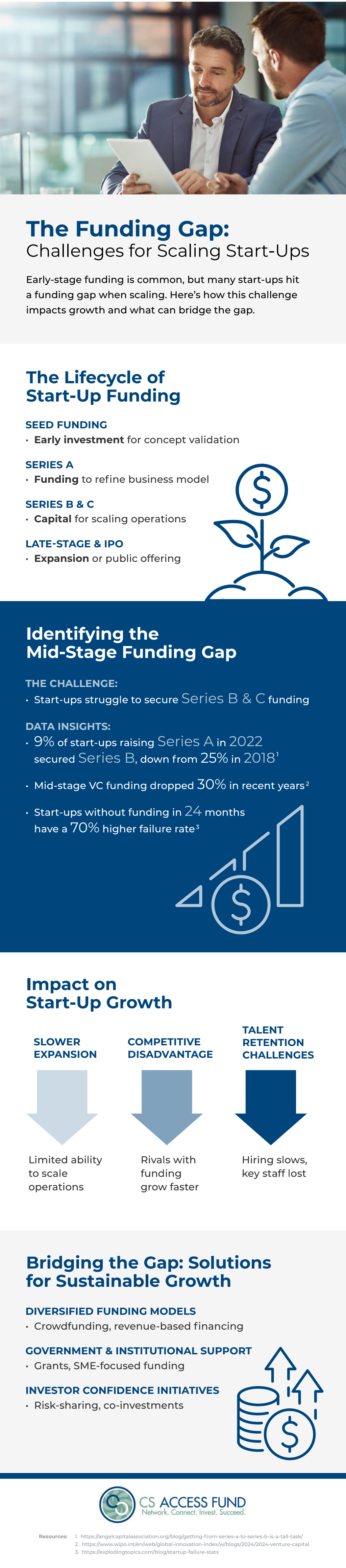
Scaling a startup from seed stage to sustained growth is rarely smooth. While early funding rounds often ride on excitement and market potential, the next steps tend to expose gaps that go beyond capital. Startups moving into expansion face tougher financial scrutiny, longer lead times for investment, and shifting expectations from investors who want more than promise. This gap between promise and proof can hold back even the most promising ventures.
From Early Support to Growth Plateau
Many startups secure initial backing from friends, family, angel investors, or small venture funds. At this stage, the energy is high and the appetite for risk is relatively generous. But once that capital runs out, startups must prove they can turn their model into repeatable, scalable operations. This transition demands more money and more evidence. Revenue growth, customer retention, and operational efficiency start to matter a lot more than vision or charisma. For companies without strong financial controls or measurable performance, the door to larger funding rounds can begin to close.
Investor Expectations Shift with Scale
As startups seek Series A or B rounds, the conversation changes. Investors are looking for data, not just ambition. Unit economics, margins, and customer acquisition costs all become core indicators of whether the business is worth scaling. Founders who fail to anticipate this shift may come across as underprepared, even if their product continues to attract attention. This mismatch can stall funding efforts, forcing startups to cut back, stretch resources, or accept terms that reduce their leverage long-term.
Timing and Strategy are Everything
The right funding at the wrong time can be just as harmful as no funding at all. Over-raising too early can inflate valuations and expectations, while under-raising may leave startups short during critical growth phases. Founders must map out financial strategy carefully and remain realistic about timelines. Certain sectors face steeper climbs. Startups in clean tech investing, for example, often require longer development cycles and more infrastructure before reaching profitability. These realities must be baked into funding plans from the start.
Raising money is never just about the pitch. It requires preparation, timing, and the ability to meet new standards as the business matures. The shift from startup to scale-up is a test of both vision and discipline. Those who anticipate the pressures and adapt to investor expectations are more likely to find the support they need to grow. For more information, look over the accompanying infographic.